Cost of ownership
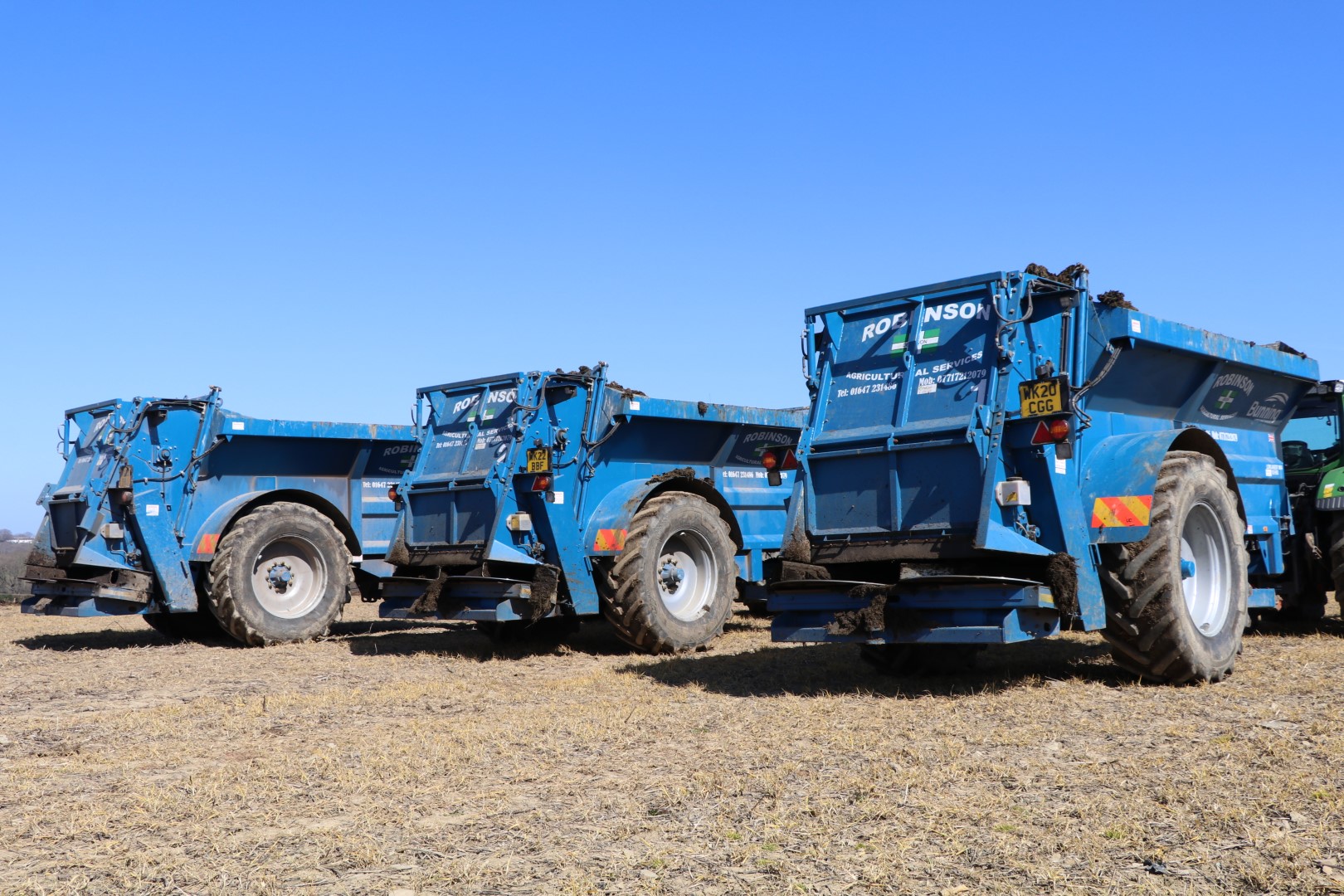
Although the Bunning spreaders aren’t the cheapest option on the market, Thomas says that the reliability, accuracy of spread width, and build quality, are the key reasons he stays with Bunning.
His current spreaders are now four years old and he’s about to purchase his fourth set, but this is only due to excellent returns from his previous three. Thomas buys through dealer, Halse SW, which also supplies most of his forage machinery, he says the backup and service is excellent from both Halse and Bunning. His close eye on rates means he knows exactly what each tonne has cost him to apply.
“My first spreaders arrived in 2013 and stayed with me for three years costing 26p/t (pence/tonne) to use. The following machines stayed for five years and cost 28p/t, while the latest trio have cost 30p/t. I doubt there’s a cost of ownership for manure spreaders, with the accuracy we have and the workload we are doing, that is lower than that.”
Thomas openly admits he isn’t the cheapest contractor, but offers a premium service with high quality machinery to achieve the best possible application. He tries to change the spreaders between four and five years old as this is where he believes the sweet spot is between optimum resale value and length of ownership. Any longer and he says the value reduces and the cost to change to a new model is greater.
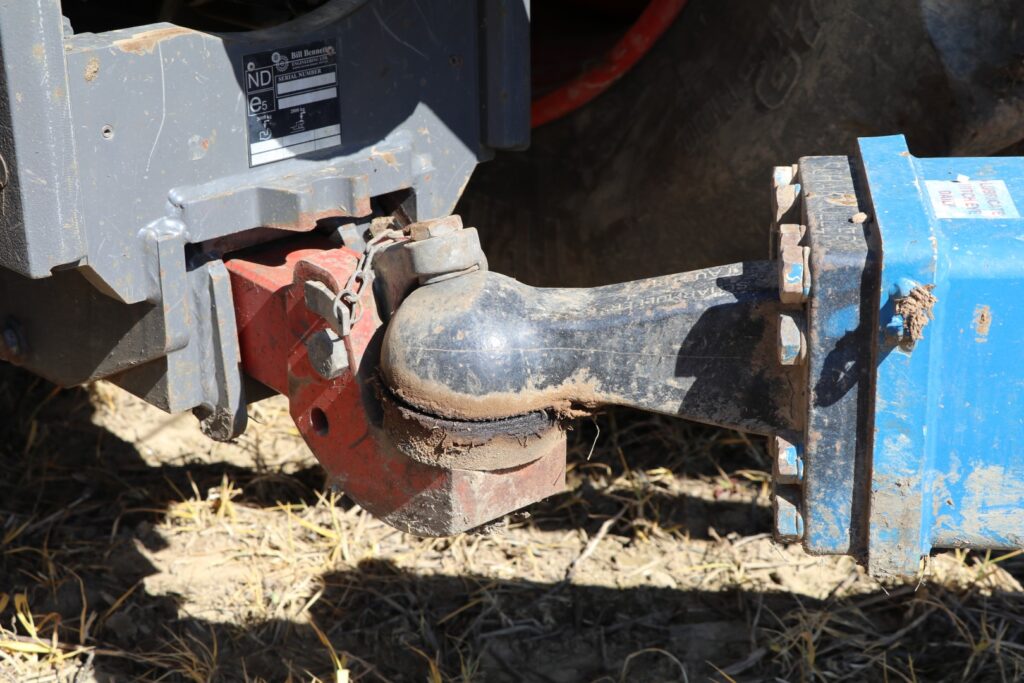
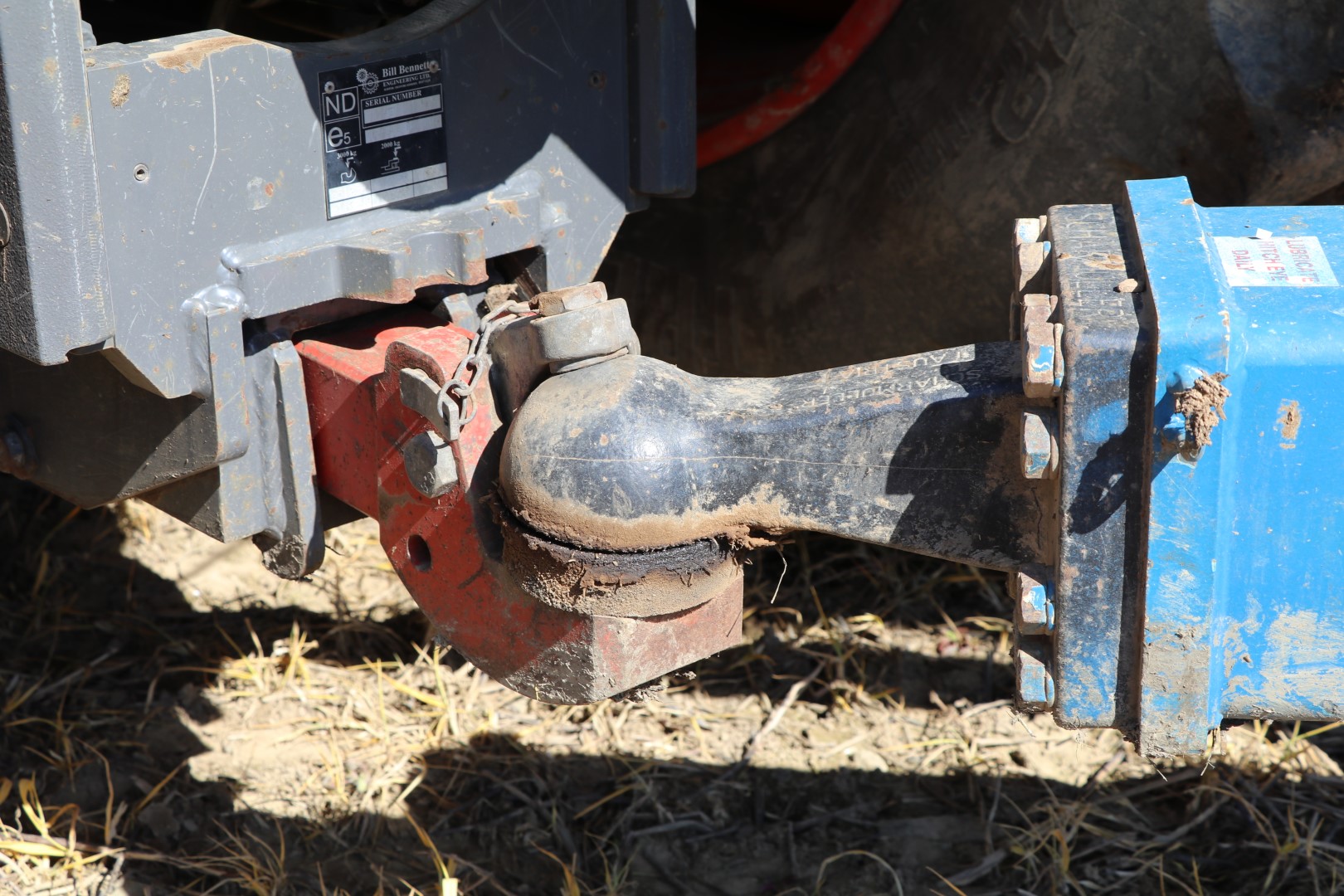
“I try and sell the spreaders privately if the trade in doesn’t meet my valuation. I know how well we look after them, so I’ve got a fair idea of the final value. I sold all three privately last time and invested the extra made into ball and spoon hitches for all the tractors.”
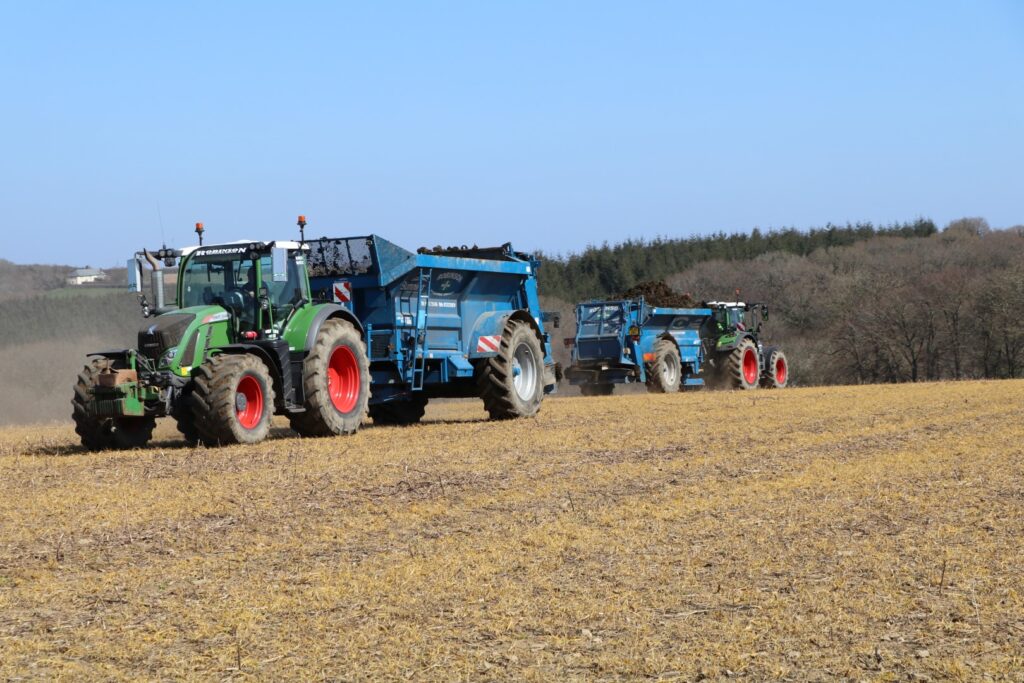
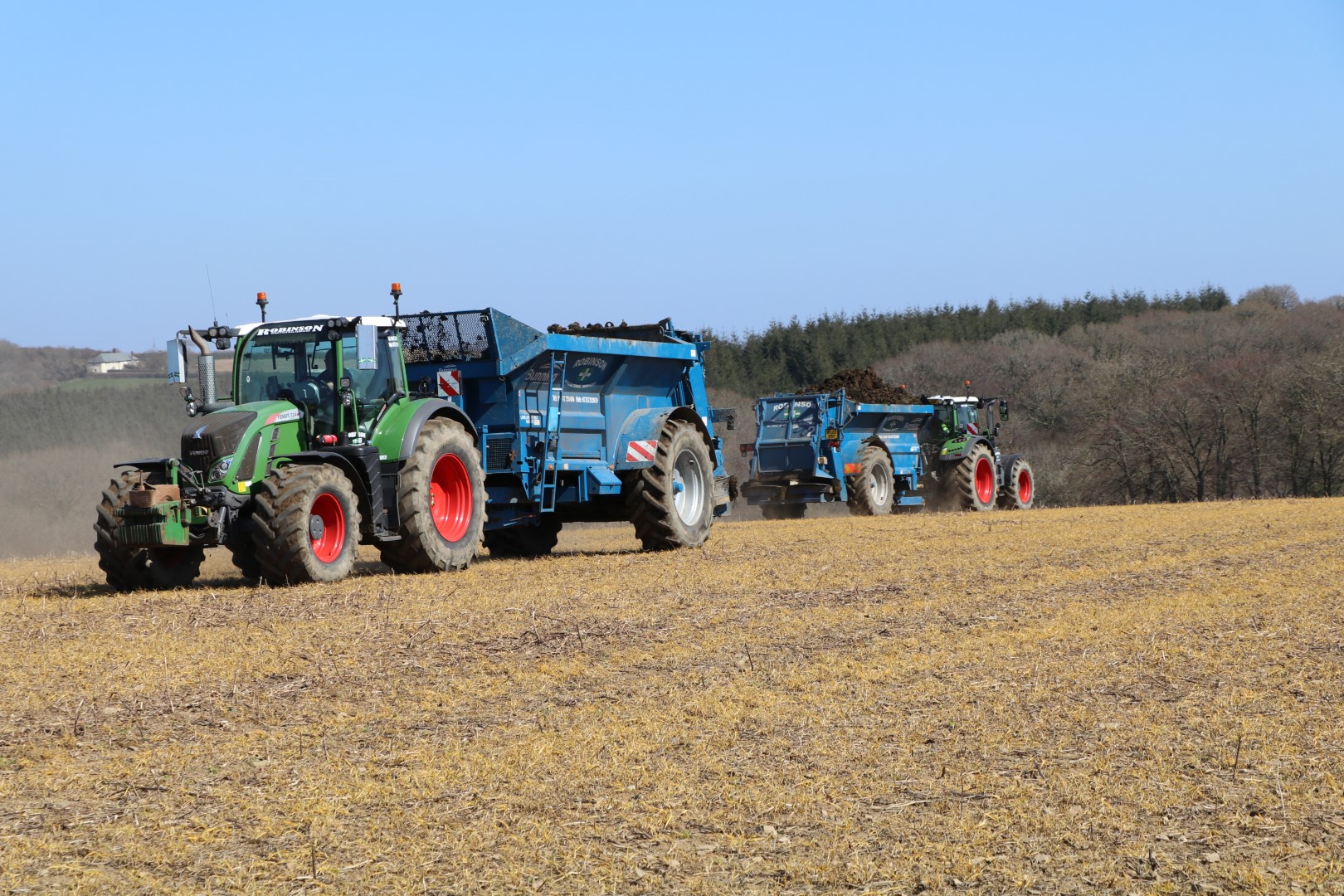
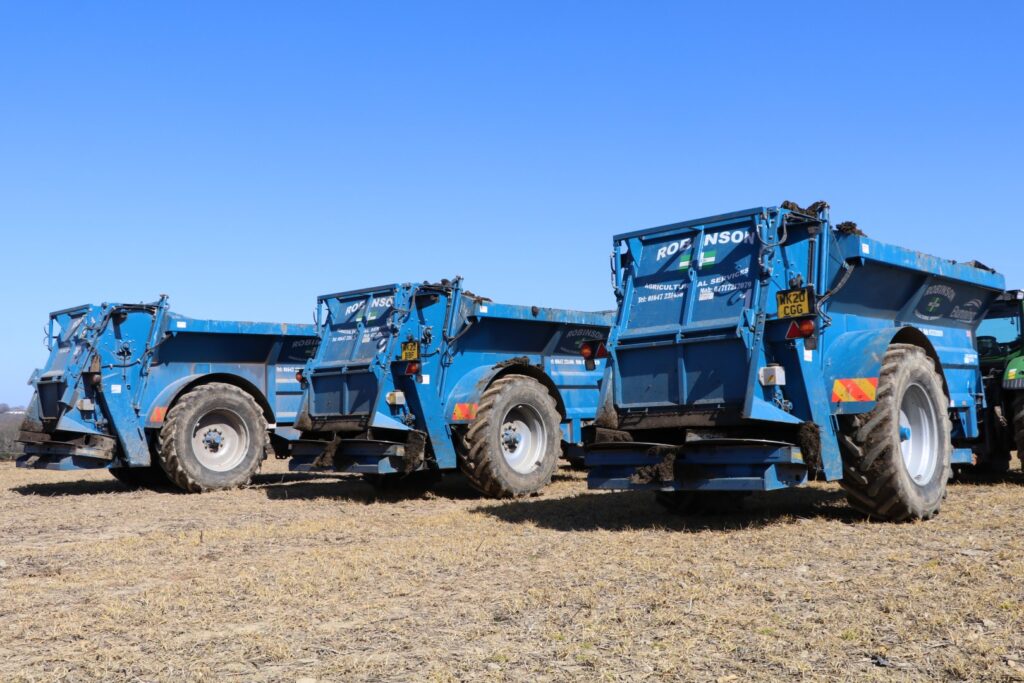
“Having the capacity with three spreaders is also a big factor, as it allows us to manage the workload across more machines. This not only means we are doing a better job for the customer because we aren’t rushing, but there is capacity when the weather is catchy, or we have a large job to finish.”
Spreading correctly
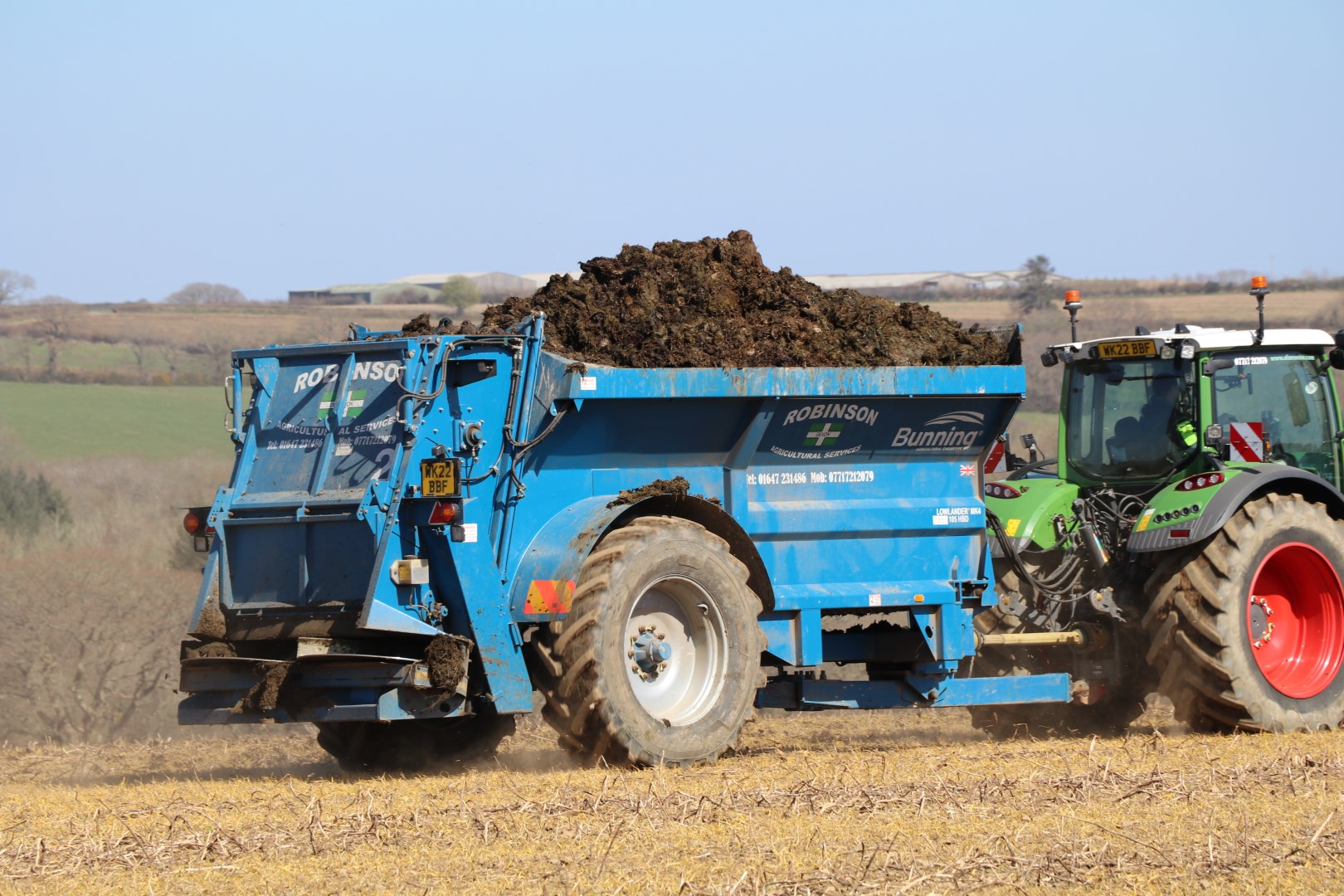
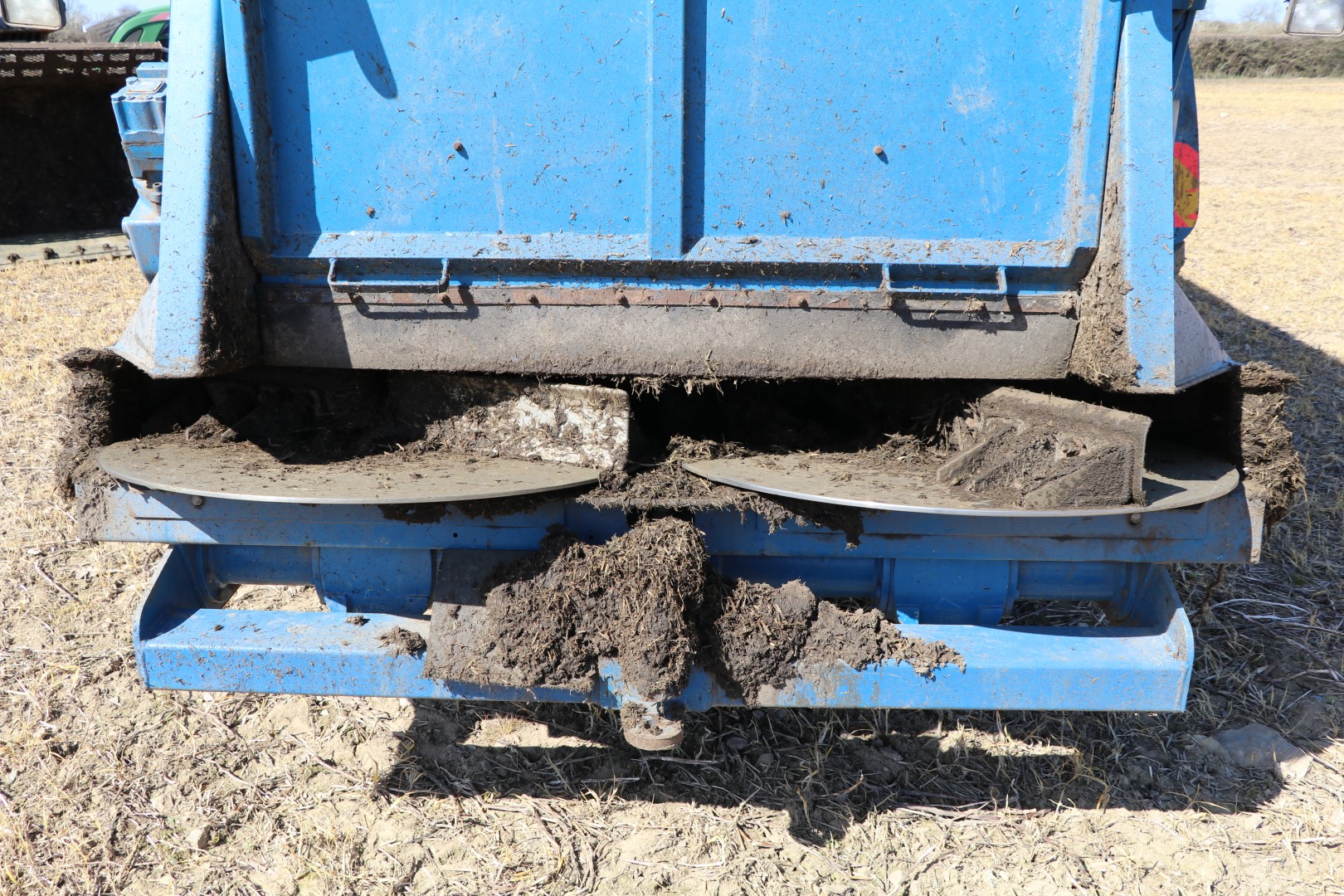
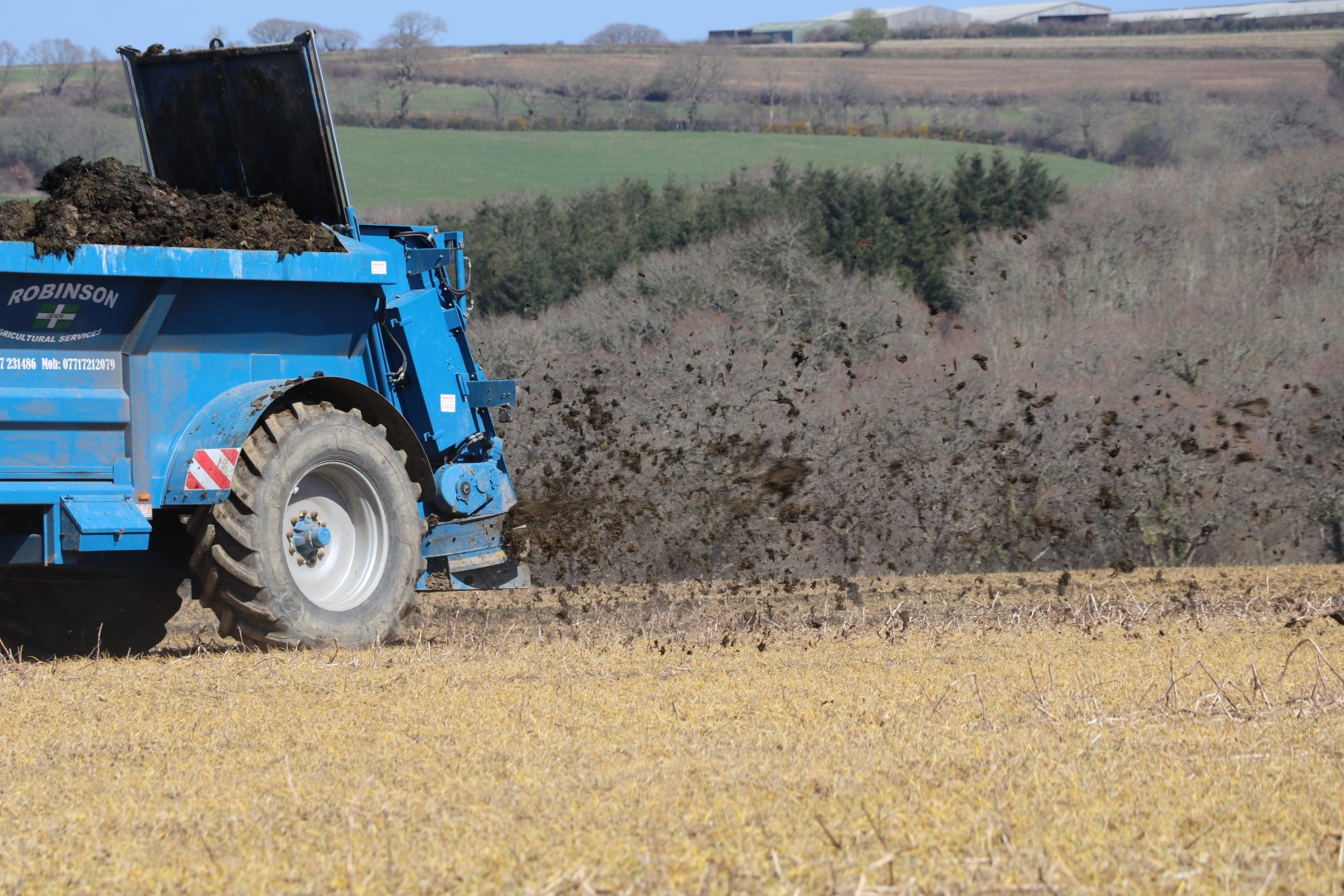
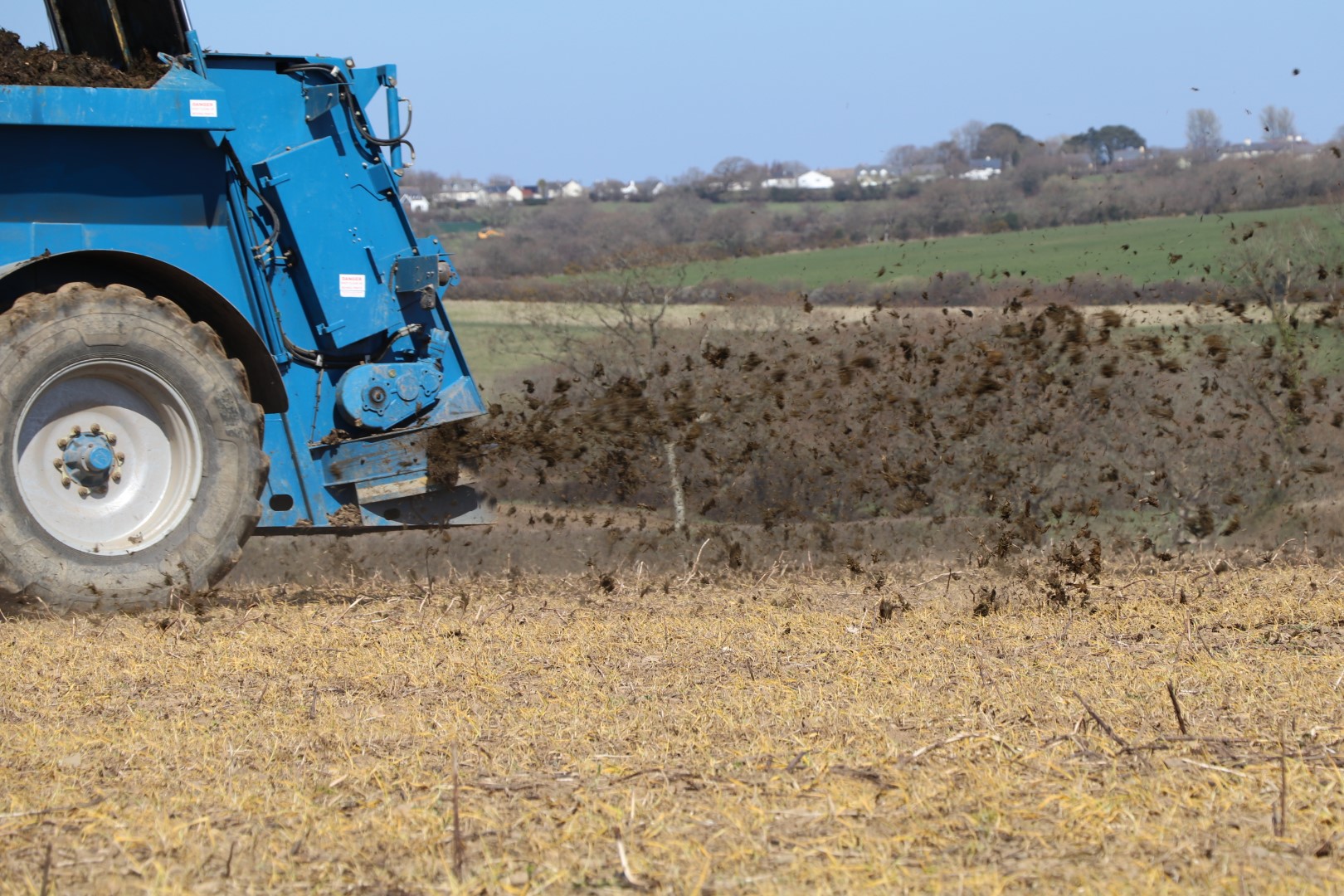
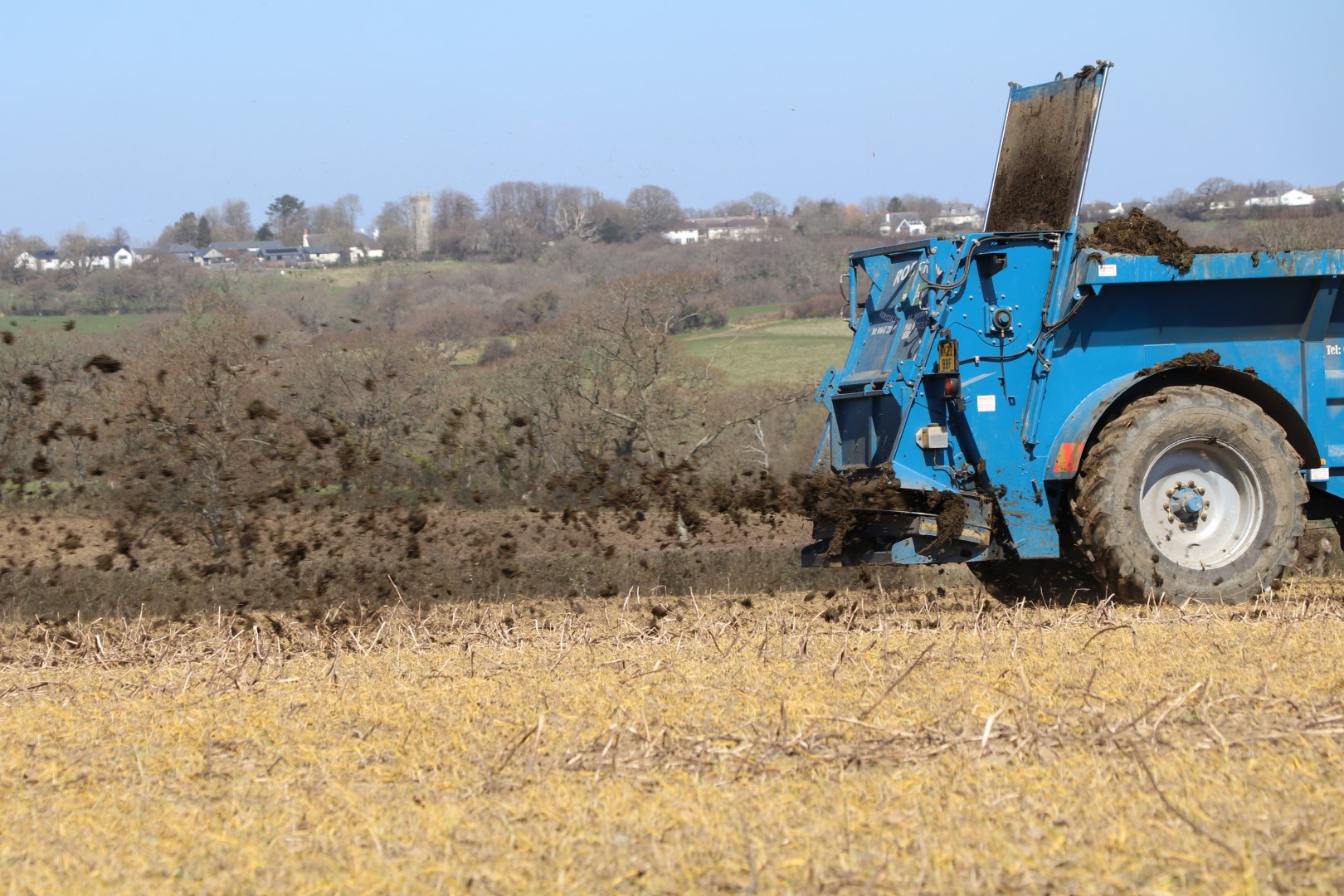
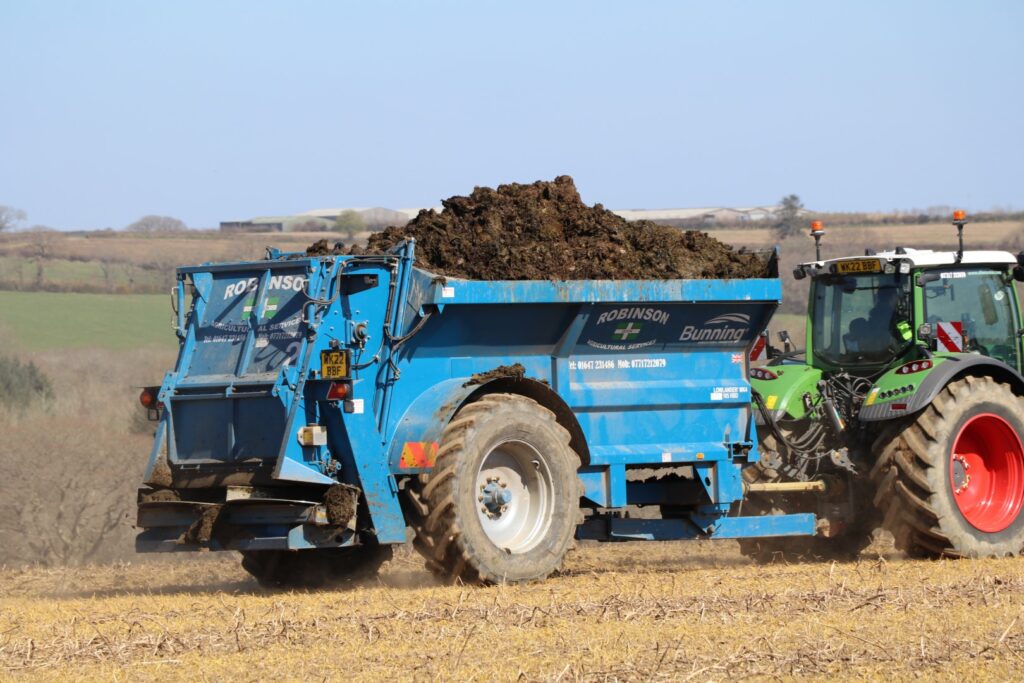
Operating across a mixed farming area, cattle manure is a common product, but a contract with a local farm to supply and spread poultry litter, alongside work with South West Water spreading sewage sludge, means the spreaders need to handle a wide range of products.
To support this, Thomas gained his FACTS qualification in 2016 to enhance his own knowledge and fully understand what he was applying, and when the optimum time to do this was.
“I know a lot of farms have their own agronomists, but as a contractor I wanted to know what we were doing from a soil nutrient perspective. I also wanted to show customers that they are getting more from the premium service we are offering.”
Part of this has translated back into applications on the home farm, where the small acreage of maize grown now doesn’t receive any bagged fertiliser, with all inputs through organic manures.
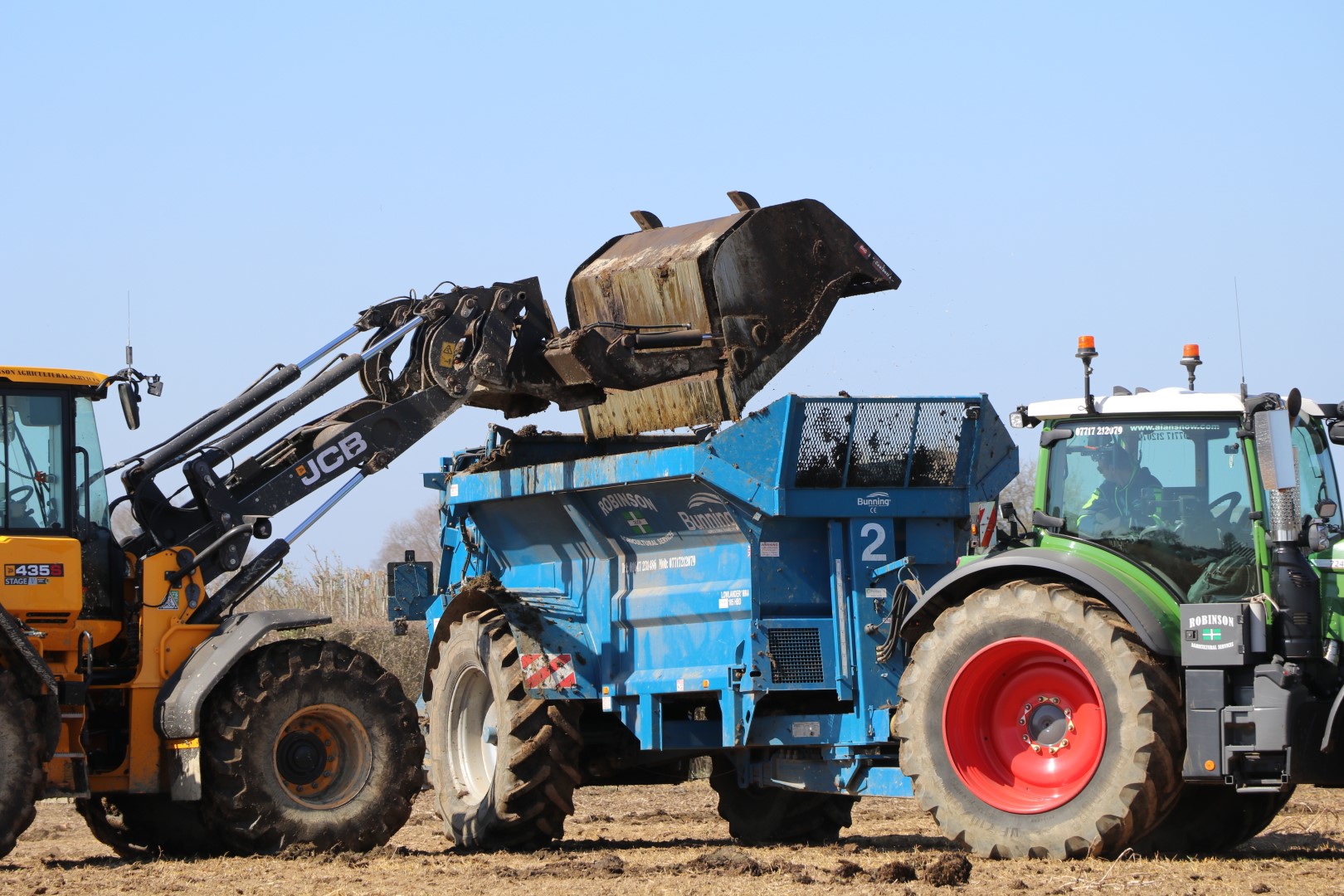
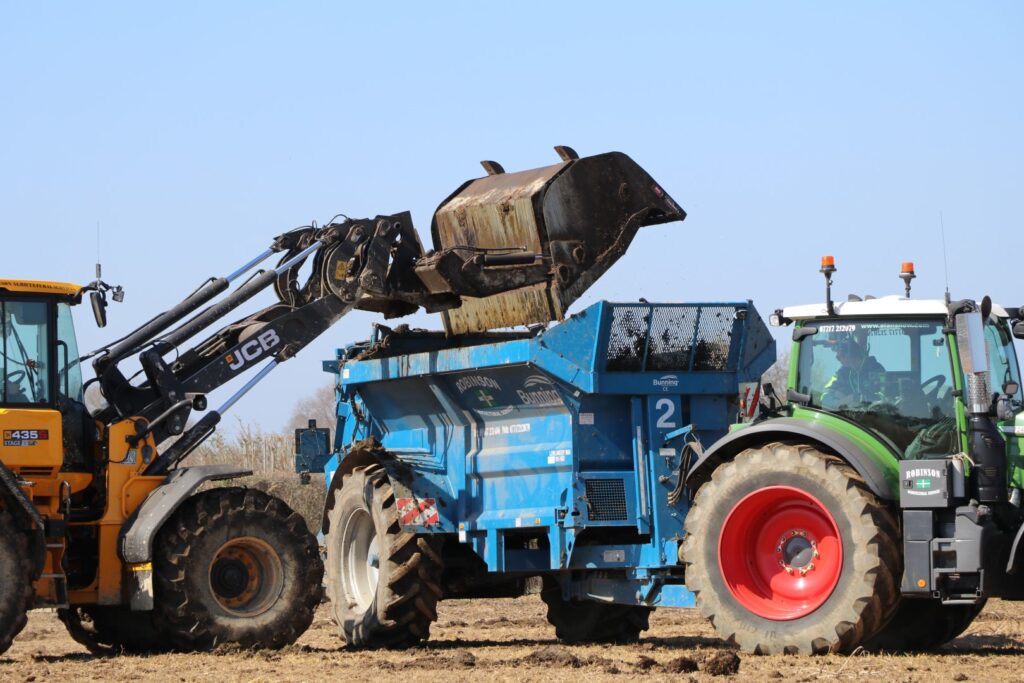
One extra Thomas doesn’t add to the spreaders is weigh cells, preferring instead to use weigh cells on his JCB 435S loading shovel to monitor each bucket. For spreading, each operator has a printout which they use as a bible for setting tractor and bed speed, along with slurry door height. He explains that this has been perfected overtime.
“A lot of the products we use are very similar year to year and have been tested. We contract for a lot of the same farms who feed the same rations, so what comes out is very consistent. I live by the settings on the sheet, and we are always bang on if we follow it correctly. I usually drive one of the spreaders or the loading shovel and I’ve got some great chaps who are very conscientious operators.”

![Spreading [3]](https://www.gtbunning.co.uk/wp-content/uploads/2025/09/Spreading-3-1024x683.jpg)
![Spreading [2]](https://www.gtbunning.co.uk/wp-content/uploads/2025/09/Spreading-2-1024x683.jpg)