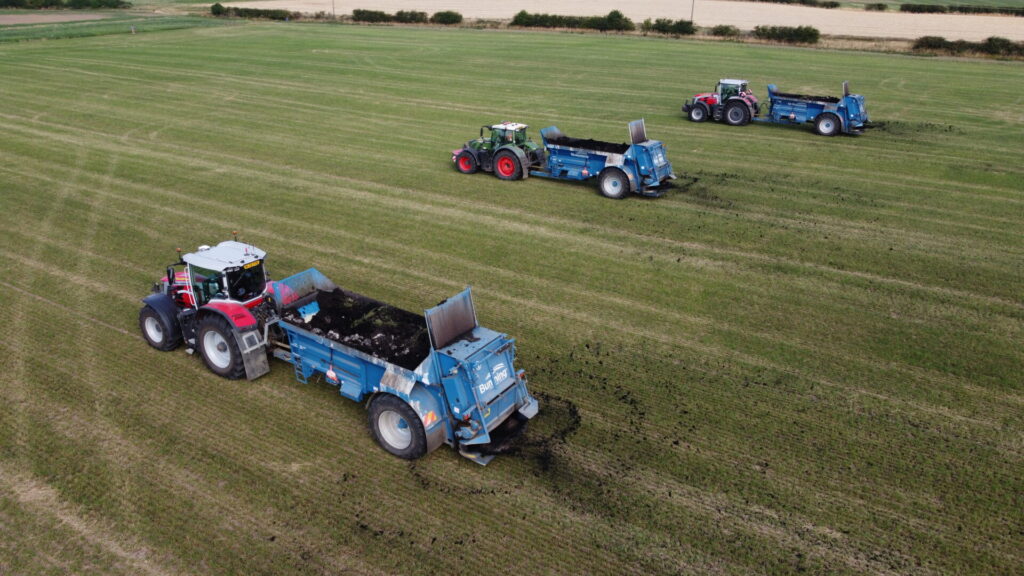
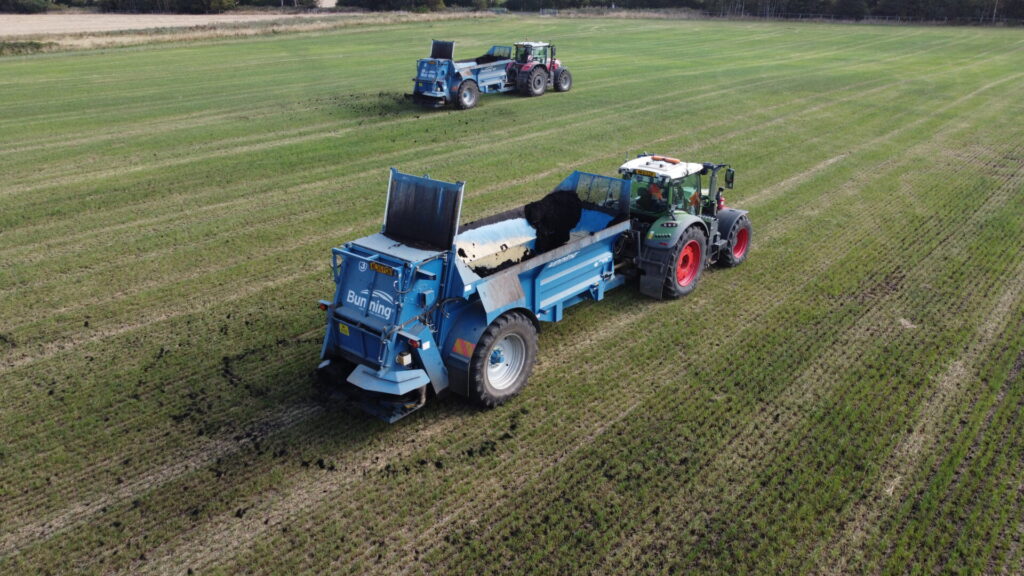
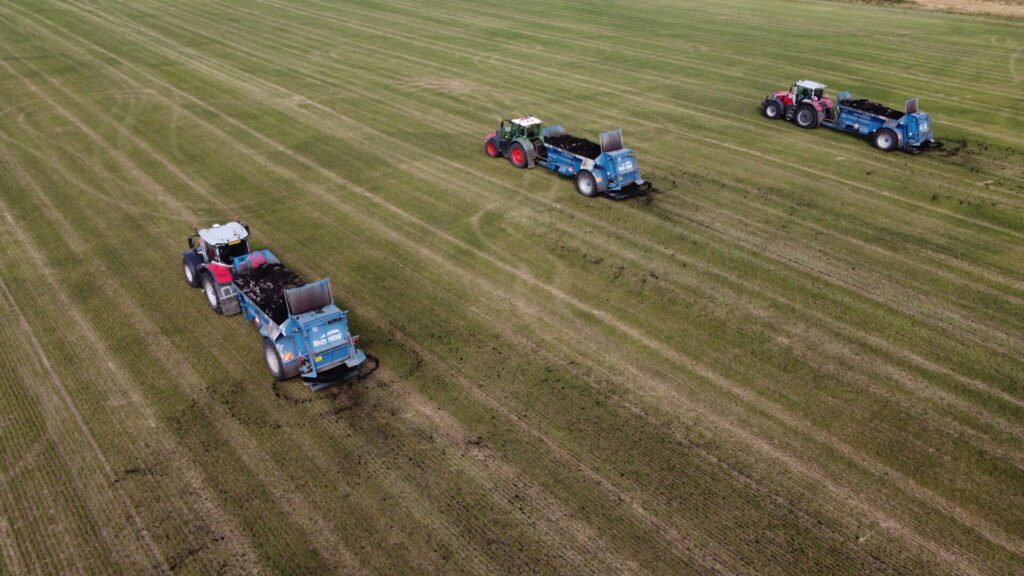
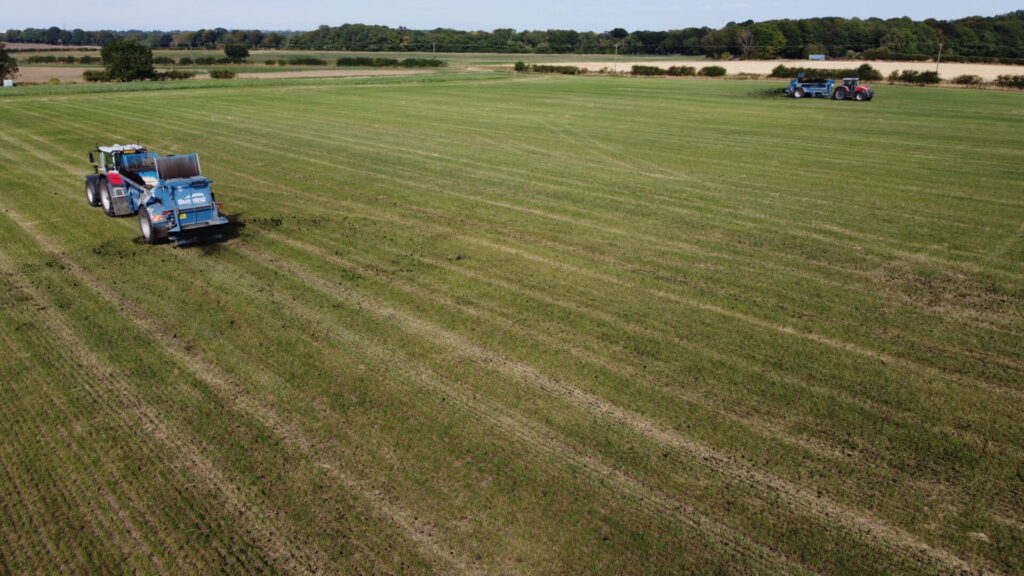
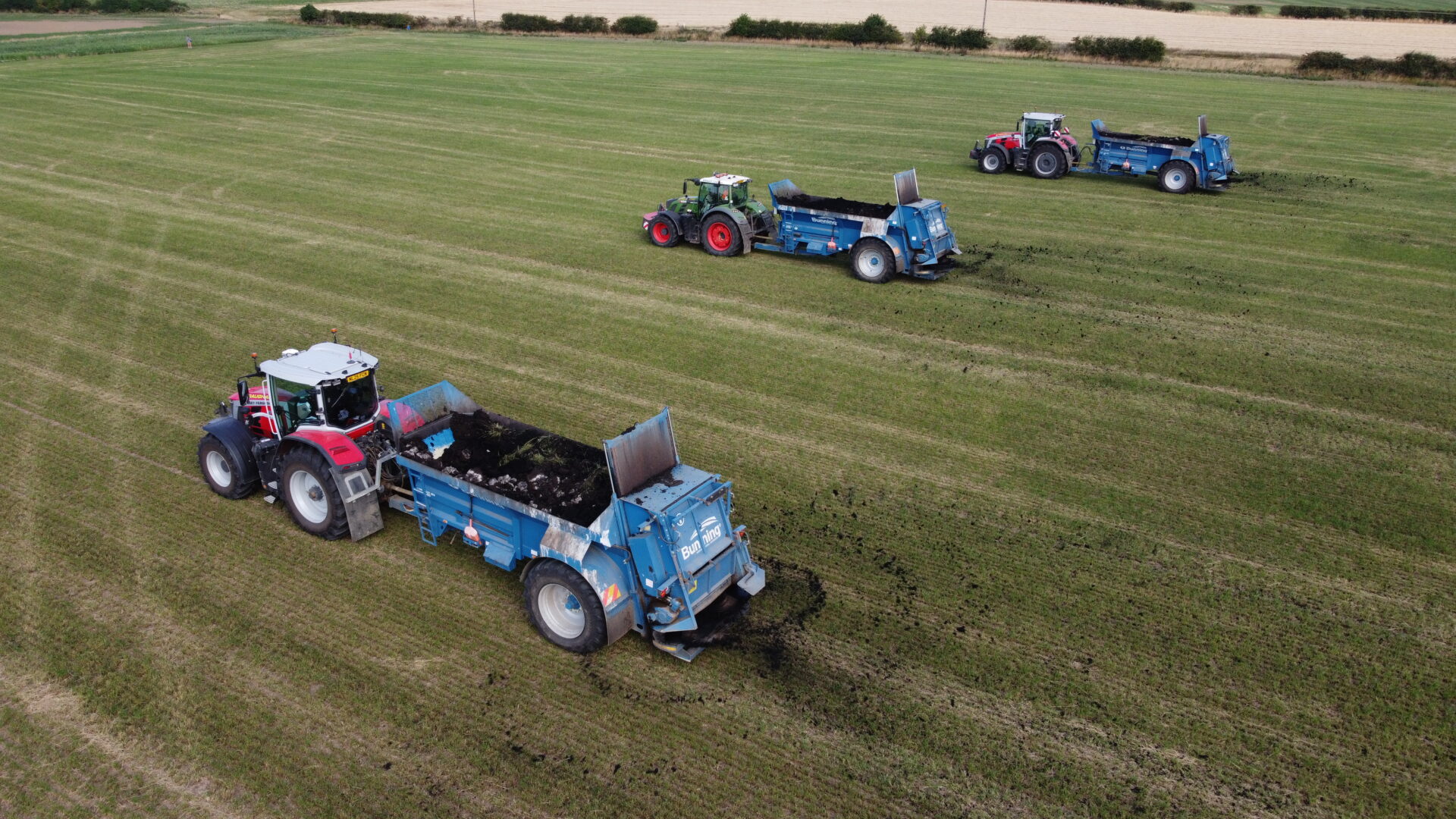
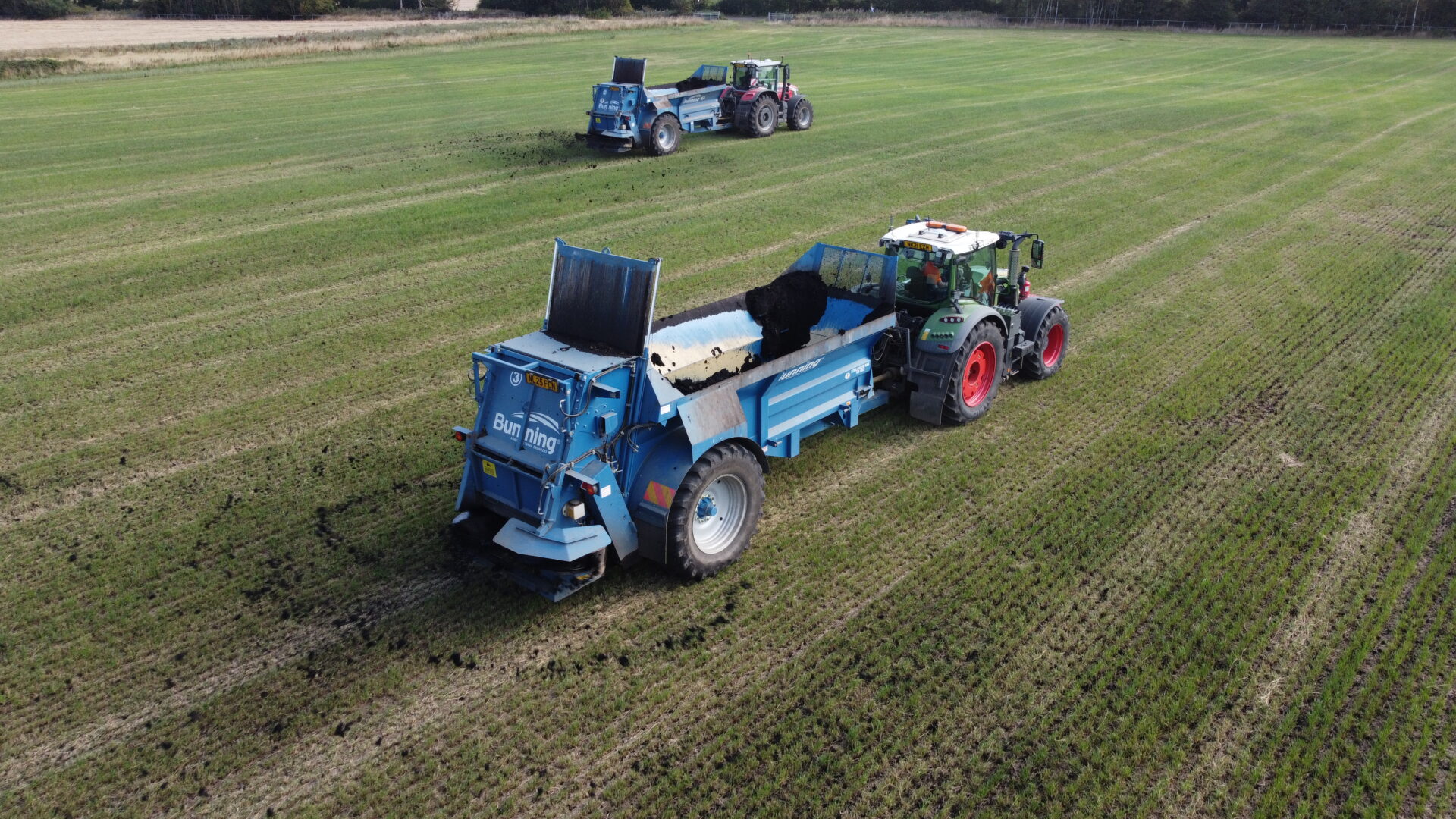
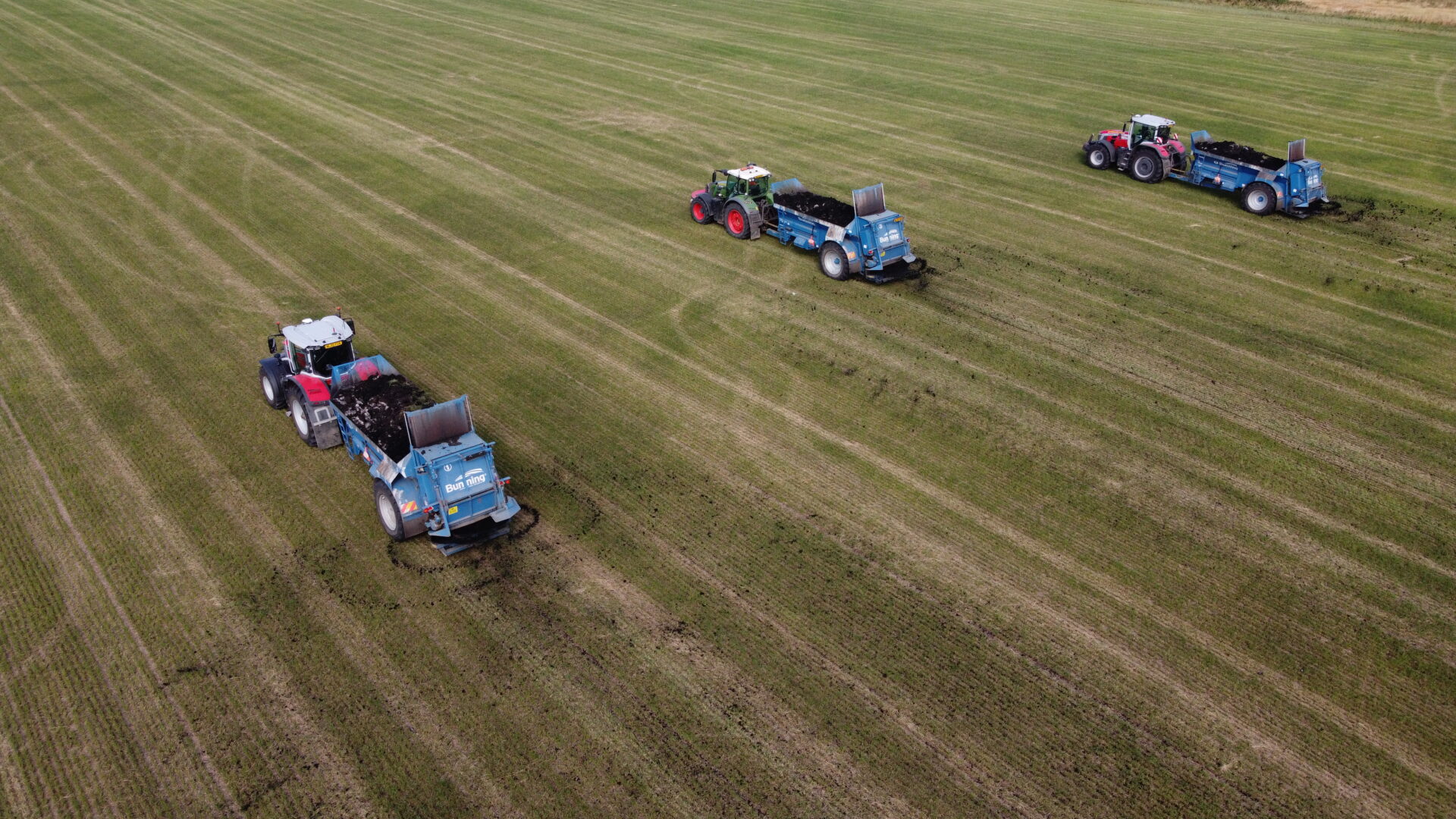
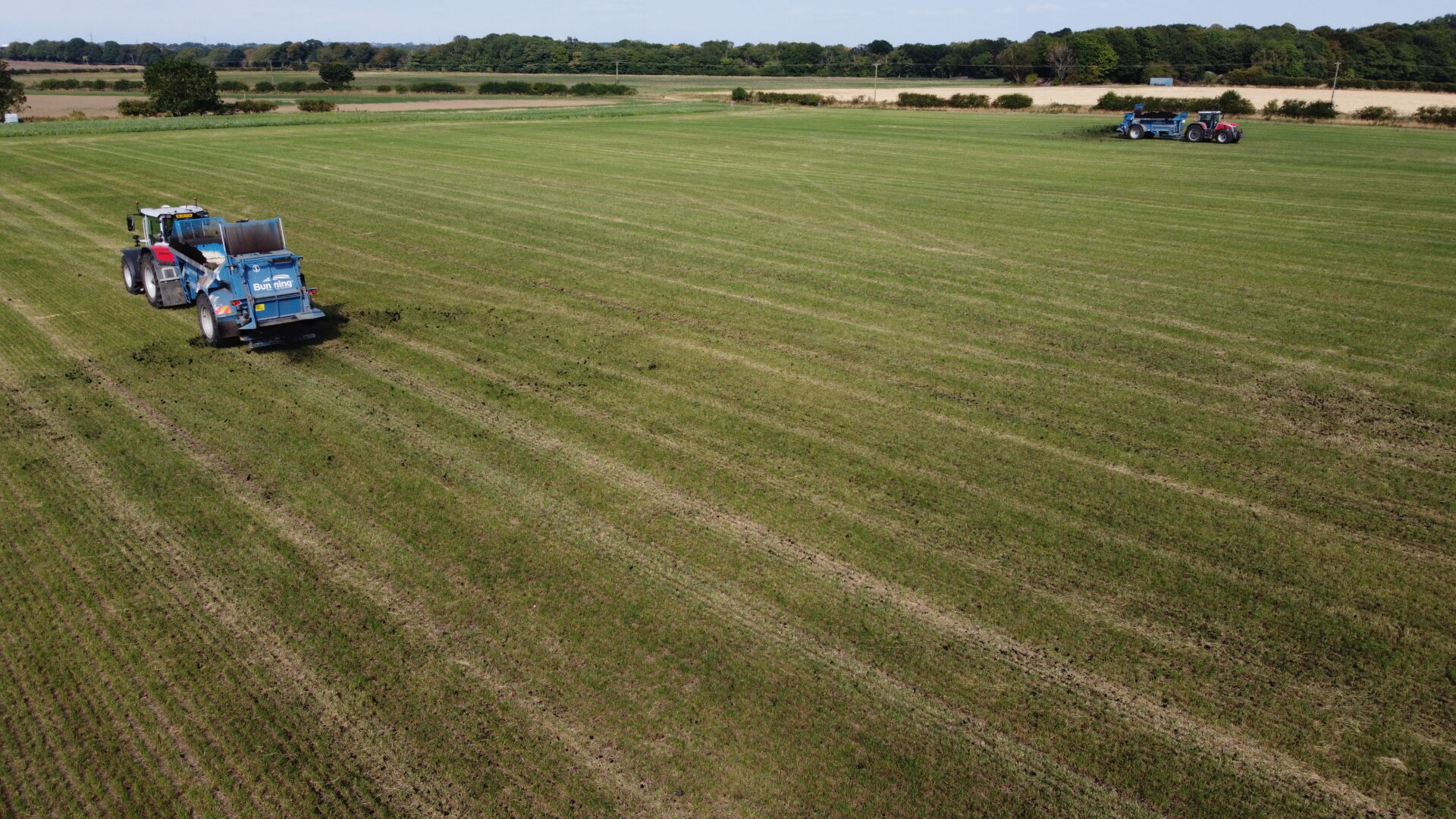
J O Straughan’s three Lowlander 120 HBD spreaders

Traceability and accuracy crucial to spreading workload

When Roger Dickinson and the team at J O Straughan took on a contract to spread 55,000 tonnes of treated biosolids between July and September each year, he knew that traceability and accuracy of every tonne would be non-negotiable.

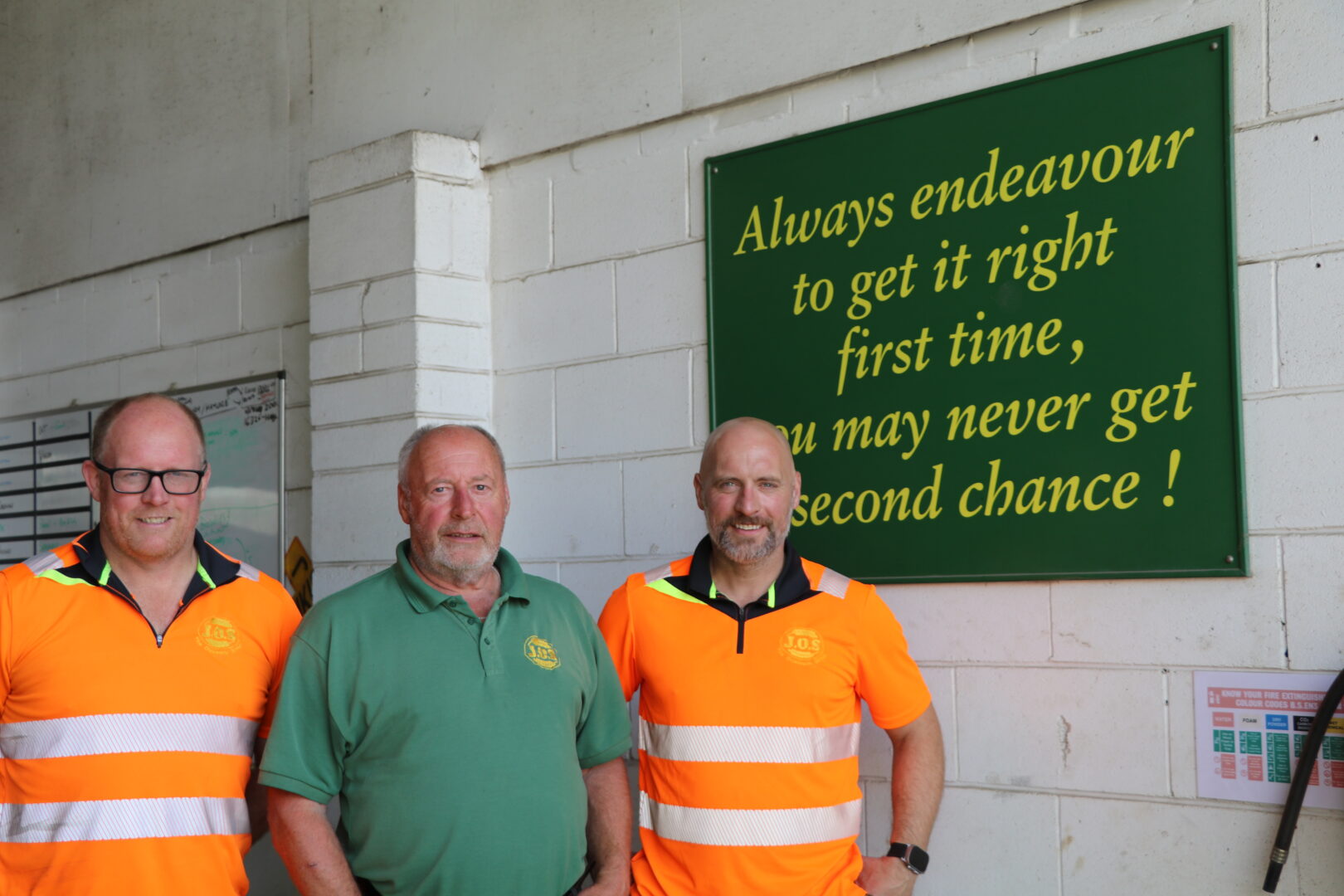
Stuart, Roger And David Dickinson

The established contracting business, based near Morpeth, Northumberland, was chosen by the Northumbrian Water as its preferred contractor. At the time, the company ran two Bunning twin vertical auger spreaders for farmyard manure applications. However, Roger, along with sons and joint managing directors David and Stuart, knew that the adoption of technology and horizontal beater and twin spinning disc application, was essential. David’s wife, Debbie, and Roger’s wife, Sandra, are both actively involved as directors in the business.

An estimated 95% of the spreading workload is biosolid application during the summer and autumn and Roger says the traceability of each job means nothing is left chance.

“Our spreading team have a tablet in the cab, and every field is mapped with rates and exact spreading locations to avoid any errors. This is live linked back to Northumbrian Water so they can access our records. We can all be audited at any time, so we must be 100% sure every job is applied correctly.”

With the farming rules for water legislation threatening to pose greater restrictions on autumn spreading, Roger says he can see this transparent way of working being implemented for other products. His spreading team have undergone in-house training with Northumbrian Water, the business is part of the Biosolids Assurance Scheme, and there’s a dedicated spreading team WhatsApp group with contacts at Northumbrian Water for live updates.

“There’s now greater scrutiny from the government on manure applications, so we must show records of what we are applying and when. Detailed application maps, weigh cell equipped spreaders running through Isobus and consistent records for each field will all help to show that manure applications are considered and accurate.

“We are proving agronomic reasons for applying the manure and it has been carefully considered. This is the direction that all applications in agriculture should be going.”

Two to Three

When the business first took on the biosolid contract, it purchased two Bunning Lowlander 120 horizontal beater and spinning disc (HBD) spreaders to meet the demand, but after two seasons, a third was added to ease the pressure and improve logistics.

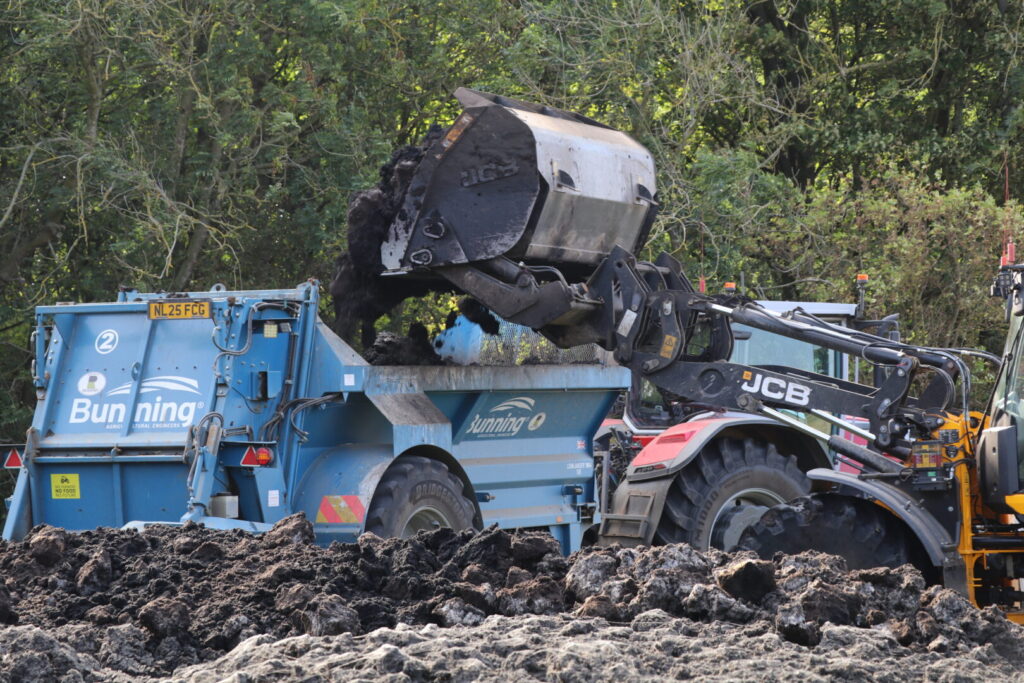
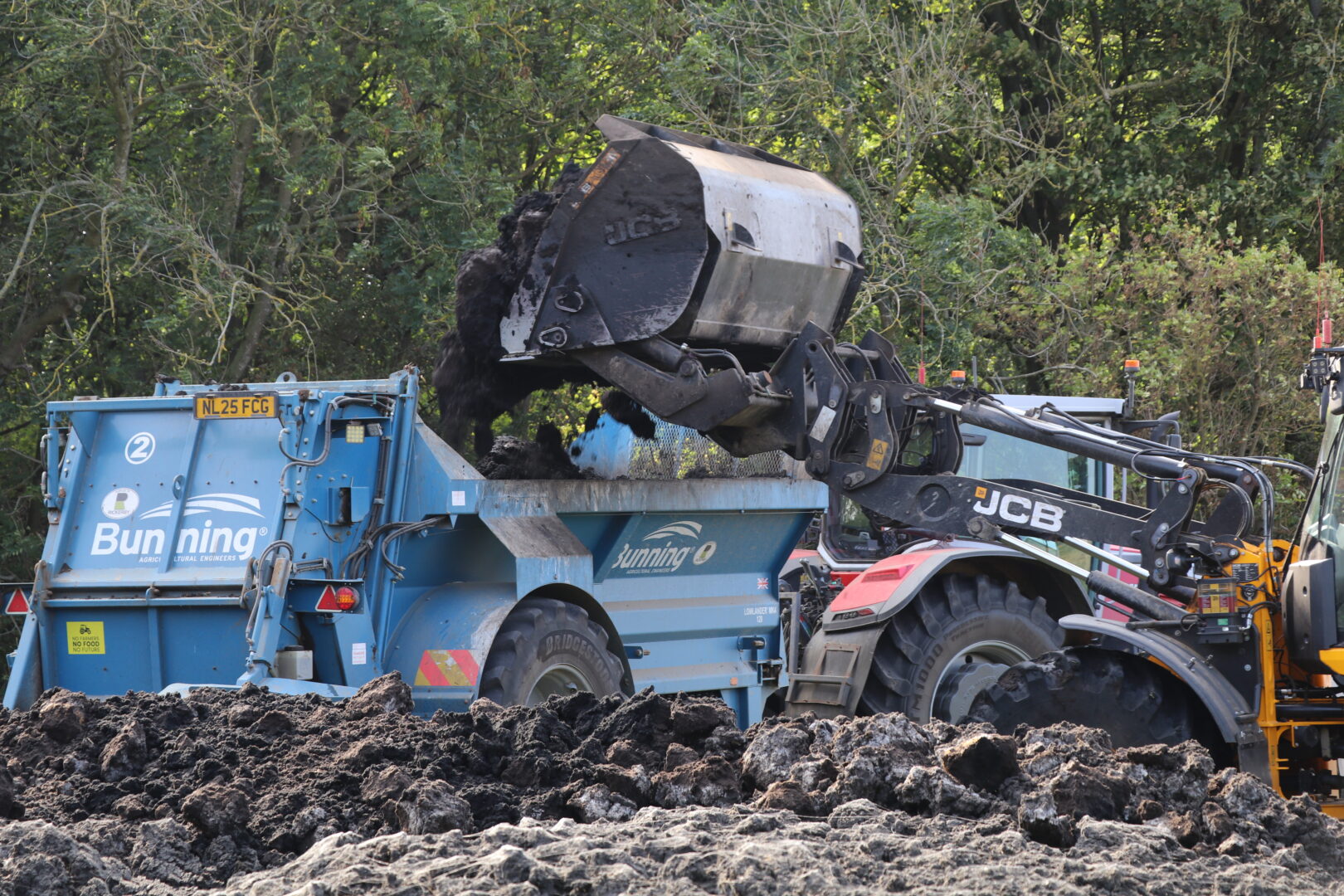
“The workload was stretched over two machines, and the guys were working some long hours to get it completed. Adding a third in 2022 has made a big difference and keeps the JCB 419 loading shovel very busy.”

On a good day with heaps close to the field, the three spreaders will easily spread 1500 tonnes of biosolids. The business chose the 120 HBD models for the shorter wheelbase compared with the longer 150 models, this allows easier access, more efficient transport logistics, and the spreaders are comfortably powered by 250hp tractors.

“We hire in two MF 8S.245 tractors for this work and use one of our Fendt 724s, which are ideal for the task. The size of the MF tractors avoids the tail wagging the dog, but aren’t too big to present access issues. Running larger spreaders would increase output, although we’d need 300hp tractors, which cost more and would increase compaction in wet years.”

The work extends to north of Alnwick and down to the Tyne Tunnel, from the business’s base near Morpeth. As J O Straughan has three lorries on fleet, two artics and rigid 8-wheeler, the latter helps haul 1200t/week from processing plant in Newcastle to the field sites. This is useful as the drivers can form the heaps in the right place ready for the spreading team in the summer.

Nutrient benefits

The business focusses on full farm contracts providing the complete service to arable customers. It undertakes 2,500ha of grass silage each season and pumps out 45,000 large square bales, among other services focussed on agricultural haulage.

Roger is a past chairman of NAAC and its current vice president, which he says is an invaluable service for keeping up to date with legislation affecting contractors and general advice on best practice. Since the biosolid applications started, the improvement to nutrient values in the soil have been evident.

David Dickinson says the business has cut back on artificial fertiliser usage in the spring due to the nutrient value of the biosolids.

“We now apply 40kg/ha of nitrogen less that we would’ve done. This is based on soil testing data from several years but also crop response throughout the winter. The autumn application sustains the crop better and means residual nutrition is available early in the spring. We also apply no phosphate and only a small bit of potash, so there are savings across the board.”

The business can only see demand for the work increasing and they’re noticing a small increase in spring workload to standing crops. The Bunning HBD spreaders can easily spread to 24m, so in majority of cases they’ll run on existing tramlines, or at 18m widths with an intermediate bout in wider setups. They also have variable rate capabilities, should this be required in the future.

As the biosolids are treated, the likelihood of foreign objects or stones creeping into the heaps are reduced compared with farmyard products, but the team still carry a selection of cutters and bottom blades, and a spare PTO guard should anything be required. Along with the accuracy, one of the main reasons for choosing Bunning was the back-up from local dealer, Rickerby, and from the manufacturer directly.

“We rarely get problems with the spreaders, but when we do, Bunning will address it straightaway, find a solution, and get us up and running again very quickly. We put each machine through our workshop in the winter and replace anything that’s required.”

Roger concludes by saying the Bunning spreaders fit with the high quality of work he has built a reputation on. “Our business has been running for 70 years and the service we provide relies on investing in premium machinery that delivers reliability and efficiency. The spreading team is no different and Bunning’s machines are ideally suited to our operation. The recording data and application technology means we are set up for the future.”